Pages

Tuesday, April 19, 2011

Dumb again and knowing it

Starting a post-doc is frustrating.  Two months ago in my graduate lab, I was able to perform experiments by myself, analyze the data quickly, and fit it into a larger picture.  Now I need support to perform routine experiments, know how to prepare data but not analyze it, and have only read enough literature to start the edges of a jigsaw puzzle.

It's like being a first year again, except now I know how frustratingly limited I am.

Two weeks ago I started a post-doc in Alan Carleton's lab at the University of Geneva, which has entailed completely switching my field.  My background was in cellular neuroscience studying AMPA receptor trafficking and synaptic plasticity in slices.  I am now investigating olfaction (and hopefully taste) using multi-electrode recording and channelrhodopsin in vivo. Where I once had a good handle on the literature of AMPA receptor trafficking, I know only the basics of olfaction.  And while I have done some in vivo electrophysiology before, the details of recording from awake animals and analyzing thousands of spikes of data is daunting.

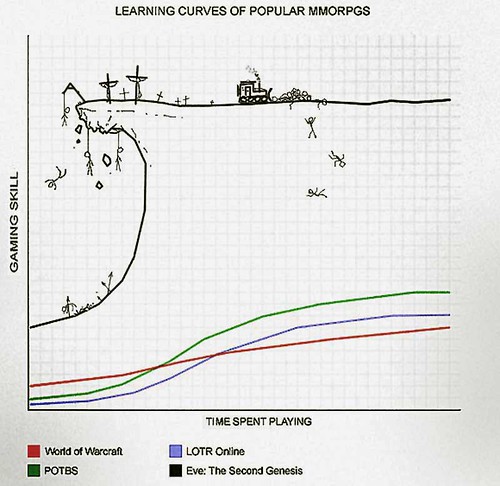
Before I started my post-doc, I was somewhat aware of my ignorance, and optimistically planned that it would take me 3-6 months to get moderately well trained.  Yet now that I am climbing the learning curve, the slope seems steeper than I anticipated, even while by reasonable standards I am doing just fine.  Maybe it just means I am learning that much more.

One thing I've learned is that no one has any idea what serotonin does (boy am I going to regret typing this when I finally stumble on a paper that explains it). Part of my project involves stimulating serotonergic centers, and measuring how that influences olfactory bulb processing. As a grad student I learned that serotonin is a neuromodulator, and that it's involved in depression and drug addiction (Duke had really great graduate training). So I performed a literature search, and found that all the reviews are from psychiatry journals, and the most cited hard neuroscience review is a 1992 review by Barry Jacobs.  As far as I can tell there has not been a single well-cited neuroscience review focusing on serotonin since Jacobs's thorough, but (hopefully) outdated review.

Getting back to serotonin, it's a fascinatingly ubiquitous molecule. It is involved in a multitude of bodily functions, from bowel movement and vascular dilation, to cognition, motor control and more.  There are fifteen receptor subtypes that are expressed throughout the brain and body, and many targets are directly innervated by different receptor subtypes with diametrically opposing effects.  Neural activity in serotonergic nuclei like the dorsal Raphe is correlated with arousal, and these nuclei are completely silent during REM sleep. Some papers have shown serotonin generally depresses sensory processing, and that Raphe neurons are silent during focused sensation, but it's all rather vague.  Despite all the research on serotonin, there is no obvious neural correlate with its activity, not reward, salience, arousal, attention, decision making, nothing.  Which perhaps is for the best given that it's involved in everything.

I'm not too keen about neuromodulation, but it seems like the field is so wide open that if I discover anything, it would be "significant."

Sunday, April 10, 2011

An Ideal Post-doc Interview Schedule

I did a LOT of post-doc interviews: ten labs, eight institutes, on three continents.  I've done two in a day, and one in a day and a half.  I've spoken with lab members who barely spoke English, and others who could out-geek me.  And having done all this, I would like to present my ideal post-doc interview schedule.

Before any flights are arranged, there should be a phone interview.  This is in part to make sure there is mutual interest in terms of project and personality.  But more importantly, this builds the groundwork for the in person interview: you can get simple questions out of the way, like what the current projects are, or what types of technology are available.  Once you arrive in person, the conversation can continue at depth, and you can do things that are natural in person, like look at data, or be social.

I like to arrive the morning or afternoon before the interview.  This gives you a day to take the measure of a city, walk around the university and the downtown, use the public transportation, and see who lives there. One of the most common questions  during interviews is, "How do you like living here?" and the best way to answer that is by living there, even for one day out of a hotel.  This also gives you a topic of conversation in the lab, and a chance to relax rather than having just stepped off a plane.  It may be tempting to have dinner with the lab the night before, but this is too much: it only takes one day to evaluate a lab.*

The night before I like to practice my talk one last time in the privacy of my room, so it's fresh for the morning.

The interview itself should generally run from 10AM-5PM.  The late-morning start allows some leeway for jet-lag, and shortens the day so an introverted scientist doesn't get worn out.  To some degree, the order of events during the interview is like a baseball lineup, where what you do matters more than the order, but my itinerary would go like this:

10-11: The science talk.  This lets the PI (and the lab members) know what the interviewee is doing, so you don't waste time during the one-on-one ("What was my project? Well I'm about to give an hour talk on it...")
11-12: Meet with PI, discussing the standard topics.  Hopefully the PI will test the interviewee a bit, and not get lost too much in their data.
12-1: Lunch nearby campus, at a place people actually dine at.  It's critical that either lunch or dinner should be without the PI, for it shows he or she trusts their people, and it lets you pump them for info.  One interview went disastrously awry when the lab members collectively bitched about their PI.
1-4: Lab tour, meeting with people in the lab, and a break. If you can, go get a coffee (or caramels) to get out of the lab for a bit. After hours of talking and being on, one can get tired, so it's nice to let other people lead the discussions.  I also like to get a 30 min break so I can check e-mail and generally veg. out.
4-5: Meet with the PI again to wrap things up.
5: Dinner! Hopefully the PI asked ahead of time if I had any preferences for fare.  I'm somewhat of a foodie, so I probably put too much weight on this.  Seeing the PI interact with the lab members at dinner is a good measure of their relationship.

And done by seven or eight o'clock,  you can decompress in the evening (or even fly out if you want to save time).  That's my ideal interview.

*One of my favourite things to do when traveling is discover new restaurants, and the best website I've found for that is Chowhound.  It allowed me to discover Serious Pie in Seattle and Fatty Crab in NYC among many others.  Message boards like Quarter to Three can help too.

Sunday, January 2, 2011

Piano and Presentations

My mother forced me to learn piano.  I initially wasn't enthusiastic, and put in the minimum amount of practice to get away without a scolding from my teacher.  By the time I was a teenager, though, and developed a more complex emotional life, I started to love playing.  Beethoven's sonatas are a great way to release teenage angst.

One of the downsides of graduate school (and undergrad for that matter) was that I left my parents' piano, and for the past seven (!) years, the only time I can play is when I go home. Each year, given the time constraints, I choose a handful of pieces to practice; this holiday they were by Brahms and Chopin.  The first day or two of practice were pretty dissonant as I regained muscle memory.  For some reason, my hands kept playing sevenths instead of octaves.

By the third day I had regained some semblance of motor control, but still found myself progressing slowly through the pieces.  This is when I remember the most important technique of practicing piano: break it down and repeat the hard parts.  If I'm slipping on a specific measure, or even a few notes, I need to isolate that section and repeat 5-10 times until I can play it almost blindfolded. * Then I incorporate it into the surrounding measures, and finally into the whole piece. **

Once I remembered how to practice, things went more smoothly.  I still was not nearly as proficient as I once was, but there was a vague semblance of musicality to my playing.

So what does this have to do with science?

I have been interviewing on and off for post-docs for the last eighteen (!) months (this is another story).  For my last interviews in October/November, I was practicing the talk I had given so many times before.  The hardest parts of my talk are the intro slide, and some data heavy slides that require a little explanation.  Every time I would practice my talk, I would stumble in the same few places.

It was then that I realized I needed to practice my talk like I practiced piano.  I pulled out the problem slides, and took clear notes on the point of each slide, and the easiest way to walk through the figures.  Then once I had mastered the slide, I put it in the context of the previous and next slide.  And finally I practiced my full talk once again, including the formerly problem slides, and it all went mellifluously.

* I need to write a whole 'nother post about the motor skills involved in playing piano.  To be able to play well, you need to basically memorize the piece in terms of motor coordination, because you can't possibly read the notes fast enough to command your hand (or at least I can't sight-read that fast).  But you still need to sheet music to remind you where you are, and to cue the motor commands.  Similarly, while you undoubtedly memorize how to shift your hand an octave, I'm convinced there is some visual feedback on hand positioning out of the corner of your eye.

** The newer Rock Bands have a practice feature, which I appreciate for the effort, but is sorely lacking in utility.  The portions of each song to practice are just too long, when usually it's just one set of notes that's tricky.  It was so much more satisfying to be able to look at the sheet music and repeat it ad nauseum without waiting for reloads.

Saturday, January 1, 2011

Mentoring (or Managing)

One overlooked aspect of scientific training is the transition from being a worker to a manager.  While most scientists don't think management is important (I once asked a faculty candidate about his management style, and he said it was the first time someone had asked him that), I think it is critical to how a lab operates.  I've worked in and talked to people from mismanaged labs, and it can significantly reduce productivity, either due to morale, or misplaced effort.

As I've gotten older, I have had a few opportunities to manage (or mentor?) people.  My general philosophy for these situations is to spend significant time training them initially so that they can work independently.  That way they can increase productivity over the long term, instead of constantly taking time.  Due to my nature, and how difficult science can be, I also try to couch mistakes as learning experiences rather than failures.

Last year I mentored an undergrad, Wei, which went swimmingly.  He was somewhat older than typical, 24, having served a few years in the Singaporean military; he worked hard, and we got along well together, discussing philosophy and politics.  The details of this are for another post.

This fall I managed a rotation student from China, let's call her Vera. Managing Vera was more difficult.  This was a fall, viz. first, rotation, so my expectations were tempered.  In the first semester of graduate school, students need to adjust to a grad student schedule that includes 2-3 days/week of classes, and more focused lab time (compared to daily 1-2 hour classes in college, and unsupervised homework time).  They also are learning to live on their own, feed themselves, pay bills, and do the other sundry errands of daily life. My goal for a fall rotation is for them to learn the techniques in the lab, and hopefully produce some reliable data.

A second challenge was the language barrier.  Vera had just come from China, and her English skills were quite raw.  Explaining techniques and concepts generally took three times longer than I had anticipated.  This of course gradually improved over the rotation, and there was not much I could do about this but be patient.

A third problem was cultural.  There is a stereotype of Chinese education that students are expected to memorize facts, and not ask questions.  I had previously thought this was overblown, but in mentoring Vera found it to be true.  I would explain something, and she would say, "Uh-huh," as if she understood.  But if I asked her to do what I taught, she would stumble.  This lack of question asking, compounded with language issues, made the first weeks frustrating.  Once I realized what was happening, I took more time when I explained things to ensure that she fully understood what I was saying.

I won't dwell on the details of the project itself, as that is not the focus of this post.  It ran into snags fairly early on, which were above Vera's expertise, and would require more time than I was willing to commit since this was not my project.  One issue from my perspective was the late schedule that she kept (typically after 10PM), so that if she had technical problems while doing experiments, I was not around to help.  I'm not sure whether to be satisfied she was willing to work late, or annoyed I couldn't help.

Another issue was missed deadlines.  At the end of the rotation she had to give a lab meeting, and I wanted to see a finished presentation a few days earlier to ensure it would go well.  She missed the first and second deadline, and I was eventually tied up in other work so I could not see it.  I was quite worried the presentation would be a disaster given the language issues, and it being her first presentation, but it went off quite well.  Once again, I'm not sure what to make of this.

Now that the rotation is effectively over, I performed an exit interview.  I try to do this when I am both the manager and the managed.  It's been a while since I did one, so I just asked the basic questions: what went well? What could be improved? Did these specific techniques work?  It was pretty interesting.

From her perspective, most everything went well.  She found me patient, and friendly.  When she had problems, I advised her but made sure she did it, giving her freedom.  I try to force people to read papers, and then sit down with them to make sure they understand the papers.  Apparently this was quite effective, since other people had asked her to read papers, which she never did, but in this case she did.

On the downside, besides the communication issues early, she mentioned that I was not "strict" enough (strict in quotes due to potential language ambiguity).  The one specific example she gave was that she often didn't come into lab, and I did not say anything.  I'm of a few minds on this.  First, for that specific example, I think it's the student's responsibility to come to lab without prompting.  If lab-time is insufficient, I can't solve that by making requests.  Should I write an e-mail saying, "Please come to the lab," or "Let's meet tomorrow."?  Or "I'm disappointed in the amount of lab time you're putting in."?    My general philosophy, from reading behavioural psychology, is that positive reinforcement is more effectively than negative reinforcement. So I would rather reward someone for coming to the lab when they do, than punish them when they don't.

Another way to interpret "strict" is structure, or organization.  I had not set a fixed time every week to discuss data or other issues, rather doing it on an ad hoc basis.  Furthermore, I did not keep records of the project status at different times, to track (and remind myself) of what was happening.  Perhaps by setting up expectations to be met, I could have incentivized achievement.

Overall, I think this project was a good learning experience.  I learned to be patient with people with communication difficulties, and how to ensure accurate communication.  I also apparently managed well enough that the "employee" thought I did a good job.  In the future, I need to be more structured or organized to make things simpler, and hopefully more effective.

Thursday, April 22, 2010

Science, delayed

In our most recent lab meeting,  I presented a recent paper from Science, CKAMP44: A Brain-Specific Protein Attenuating Short-Term Synaptic Plasticity in the Dentate Gyrus.  This was a great, relatively straightforward paper that: 1.) did a proteomics screen to identify a novel AMPA receptor associating protein called CKAMP44; 2.) generated a CKAMP44 antibody 3.) performed immunostaining and northern blots to confirm it was expressed specifically in the brain; 4.) performed westerns to show that CKAMP indeed does associate with AMPA receptors in the brain; 5.) transfected oocytes with CKAMP and measured their modulation of AMPA receptor currents; 6.) generated a KO mouse of CKAMP; 7.) and used the KO mouse to show how CKAMP44 modulates synaptic currents in slices.  For the details, I would recommend reading the paper, since it is relatively straightforward.


Normally, one would think reading such an interesting paper would be a delight.  I, however, was annoyed.  This paper represented years of work by the nine authors.  I suspect that they initially identified the protein 3-4 years ago in the proteomics screen, and confirmed its importance using northern blots/antibodies shortly thereafter.  Yet I had to wait until now to hear about it.  People in the field may have known of CKAMP's existence from conferences, but the information had not disseminated through the community until the paper was published.


Isn't that insane?  That in the age of the internet and instant communication, we as scientists are still waiting months and years to hear about others' research?  Shouldn't we have a better system now?


I have many issues with the current publishing and review system, but the one this paper most applies to is the idea of how journal publishing works. Most of my problems with the system were inspired by Clay Shirky's recent book Here Comes Everybody about how the internet is changing our modes of communication and work.  In one chapter of the book Mr. Shirky described how our models of news is changing.  Before the internet, the model was that journalists would search out interesting stories (as well as be supplied them by publicists or interested parties), filter out the chaff, and publish the newsworthy items; simply put, they filtered then published. This was necessary becase the costs of gathering and transmitting information was high.  For example, if you wanted court information, you had to actually travel to the courthouse, rather than calling them, or looking up the information online.


Now, however, the news model is radically different.  With the internet, everyone has a voice (at least in theory), and can broadcast to their friends what they think is important.  Many news stories now are broken on blogs, and then linked to by other blogs, until they are finally picked up by the major news outlets.  In this model, then, everything is published, and then filtered by users to identify what is important and should be read.


So what does this have to do with science?  The journal publishing system is stuck in the filter-then-publish mode, with editors and reviewers gatekeeping information.  Their jobs (theoretically again) is to verify that scientific findings are true, and of interest.  And to exceed their thresholds for publication, authors need to perform controls and do exciting experiments.


The problem, however, is they don't and can't perform those duties.  It is literally impossible for a reviewer to verify any given work is true, either due to falsification or sloppiness.  Journals are littered with papers that were retracted, or more commonly, never reproduced.  And significance is completely arbitrary, and determined not by journal editors, but after the fact by citations.  I can name many papers in prestigious journals I consider insignificant, and Journal of Neuroscience papers that have been cited one hundreds times (e.g. Rich Mooney's 2000 J Neuroscience paper).


And the cost of this antiquated system is time.  It takes time for scientists to perform all the experiments, beyond the initial, interesting ones; it takes time for authors to put together "stories" (which is an issue for another time), write the paper, and put together pretty figures; it takes time for editors to decide whether to review it, and time for reviewers to pass judgment; and then it takes more time to actually publish it (although this time has lessened with internet publishing).  And if you sum all these time together, you get year long delays between when people do interesting experiments, and the scientific community finds out about them.


Unfortunately, despite my dislike of the current publishing system, I have no simple alternative system.  Whatever the new system entails however, I hope it includes faster publishing times so we can learn of the information faster.