Summer courses have started at Woods Hole, so time for another embarrassing story.
I was a tech for the imaging section of the neuroscience summer course around five years ago. I arrived a week early, during the e-phys section, to incubate some slice cultures. One evening after work some people from the course headed over to the local bar, the Kidd, and one of the physiologists introduced me to his older friend Clay.
"What do you study?" Clay asked me.
"I study AMPA receptor trafficking during LTP. Do you know much about it?"
"A little bit, but fill me in on the details."
I went on to explain that there are two main subunits of AMPA receptors at the synapse, GluA1 and GluA2. During LTP there is a change in inward rectification, which means that GluA1 receptors specifically are inserted into the synapse.
"Oh yeah?" Clay asked.
Seeing that he might not remember the intricacies of rectification, I explained in detail what inward rectification is, and how a positively charged amino acid in the receptor pore prevents positive ions from flowing in.
The next day I found out that Clay was in fact Clay Armstrong, one of the first people to study how ion pores affect rectification in potassium channels.
Showing posts with label misc. Show all posts
Showing posts with label misc. Show all posts
Monday, July 1, 2013

Thursday, January 3, 2013
What if I call you
It's grad school interview season, so here is a story from my first interview at the University of Pennsylvania.
I quickly fell in love with Penn. The campus was urban, like Case, but had some Ivy-status je ne sais quoi. I took an evening to see a game at the Palestra, a temple of college basketball. Ate oily cheese-steaks and gawked at medical curiosities at the Mutter Museum. Philly was perfectly grungy.
The interview was not perfect. In undergrad, I modeled intracellular calcium dynamics. Kwabena Boahen asked me what the shortcomings of my model were, and I had no good answer. I have no doubt that I was an arrogant know-it-all, too, like many young scientists.
In general, though, things went well from my perspective.
At the goodbye party, I ran into Mikey Nusbaum, the director of graduate studies. Nusbaum, by all accounts, was a phenomenal DGS, and genuinely interested in student welfare. He was also something of an eccentric scientist, wearing an earring, raising horses, and letting people call him Mikey.
Like Nusbaum, some of my friends call me Mikey, which led to this exchange:
Me: "I noticed people call you Mikey. My friends call me Mikey too."
Nusbaum: "Oh, I really don't care what people call me."
Flash to freshman year of college, when there were two Steves in my suite, and I was trying to figure out what to call them. One of the Steves said the same thing as Nusbaum, "I don't care what you call me." And I responded the same way at Penn as I did as a freshman.
Me: "What if I call you jackass?"
I didn't get in.
I quickly fell in love with Penn. The campus was urban, like Case, but had some Ivy-status je ne sais quoi. I took an evening to see a game at the Palestra, a temple of college basketball. Ate oily cheese-steaks and gawked at medical curiosities at the Mutter Museum. Philly was perfectly grungy.
The interview was not perfect. In undergrad, I modeled intracellular calcium dynamics. Kwabena Boahen asked me what the shortcomings of my model were, and I had no good answer. I have no doubt that I was an arrogant know-it-all, too, like many young scientists.
In general, though, things went well from my perspective.
At the goodbye party, I ran into Mikey Nusbaum, the director of graduate studies. Nusbaum, by all accounts, was a phenomenal DGS, and genuinely interested in student welfare. He was also something of an eccentric scientist, wearing an earring, raising horses, and letting people call him Mikey.
Like Nusbaum, some of my friends call me Mikey, which led to this exchange:
Me: "I noticed people call you Mikey. My friends call me Mikey too."
Nusbaum: "Oh, I really don't care what people call me."
Flash to freshman year of college, when there were two Steves in my suite, and I was trying to figure out what to call them. One of the Steves said the same thing as Nusbaum, "I don't care what you call me." And I responded the same way at Penn as I did as a freshman.
Me: "What if I call you jackass?"
I didn't get in.
Thursday, March 22, 2012
Notes on mouse licking
We recently got two things I've been waiting for: transgenic mice, and a lickometer. In anticipation of recording from taste cortex, I've started training mice to do a simple licking task: lick 9+ times following a short tone. (An FR5 lick schedule, borrowed from Sid Simon's lab.) (Doing this has made me realize the unique nuisance of investigating taste: unlike, other sensory systems, like olfaction or whisking, you need to train your mice before every experiment.)
Since the task is so simple, I designed a short, straightforward training protocol (see below). The first goal (Stage 1) was to get the mouse to lick following a tone. To reinforce this behaviour, every time the mouse licks within the "lick window," they get a water reward of 1-2uL (the mice are, of course, water deprived). Once the mice learn to lick after the tone, I gradually decrease the number of rewarded licks, until they only get water for a single lick in the middle of the window (Stage 2). To ensure they lick the whole time, the mice get a water reward after 9 licks. Finally, once the mice have completed Stage 2, we are ready to try (potentially aversive) tastants in the middle of the task (Stage 3). Once the mice perform Stage 3 correctly, we can record.
Since we just got the lickometer equipment, I ran a pilot study with two mice, for two weeks. At the end of the two weeks, both mice were performing Stage 2.2 fairly well. Here is the lick-o-gram for the last 200 trials of training for Mouse 2 (M2):
Some observations:
1. Individual mice behave differently. The mice we're using, C57/Bl6, have been inbred for over twenty generations, and are practically clones. Despite the genetic similarity, the two mice I trained had different behaviour. Mouse 1 (M1) didn't hide in the behaviour tube, and refused to lick the water spout at first. In contrast, M2 hid in the behaviour tube, and had to be coaxed out; and quickly started licking the water spout. I don't know whether these differences are due to epigenetics, genetic drift, small differences in how I handled them, or something inscrutable. But it did surprise me.
2. The best way to get a mouse to move forward is to (gently) pull his tail.
3. Mice may solve your task in unexpected ways. The goal of training was for the mice to lick following the tone. M2 didn't quite understand this, but did know that if he licked a lot, he would get water. So he just licked continuously, ignoring the tone, and got his water. While I don't mind this in practice - since I just want them to lick - I wanted to see how well they could learn the complete task, so I extended the inter-trial interval, and M2 stopped licking constantly.
Continuing this theme, I do not think the mice quite understood that the tone preceded the lick window. In the lick-o-gram above the mouse stopped licking after 4 seconds, and restarted after 7 seconds. This makes me believe the mouse knew there was water every ~10s, rather than being cued by the sound. Also notice, the mouse did not really perform the task for the first 5 or so trials, then did well. MICE, WHAT ARE YOU THINKING!?!?
4. Motivation happens in bouts. The mice were water deprived before the experiment, and performed quite eagerly for the first 100 or so trials. However, after a while they would stop, only to restart the task for 5-10 trials. Two hypotheses: licking thousands of times gets tiring after a while; or a few hundred uL of water slakes their thirst for a bit.
5. When shaping mouse behaviour, you must move step-wise. In moving from Stage 1 to Stage 2, I started by removing the reward for licks 6-9, and the mice continued to perform pretty well (in general, they seem to lick for a few seconds after free-licking time). When removing the reward for the initial licks, the mice continued to perform when I dropped the first lick, but if I stopped rewarding the first two licks, they gave up, and simply stopped licking. So I will have to be patient when removing the initial reward licks.
Since the task is so simple, I designed a short, straightforward training protocol (see below). The first goal (Stage 1) was to get the mouse to lick following a tone. To reinforce this behaviour, every time the mouse licks within the "lick window," they get a water reward of 1-2uL (the mice are, of course, water deprived). Once the mice learn to lick after the tone, I gradually decrease the number of rewarded licks, until they only get water for a single lick in the middle of the window (Stage 2). To ensure they lick the whole time, the mice get a water reward after 9 licks. Finally, once the mice have completed Stage 2, we are ready to try (potentially aversive) tastants in the middle of the task (Stage 3). Once the mice perform Stage 3 correctly, we can record.
 |
| Learning protocol. (Top) Tone timecourse. (Middle) Liquid dispensed during licks. H = water; T = tastants. (Bottom) Example lick history. In Stage 1, each lick during the "lick window" is rewarded with water. In Stage 2, we gradually reduce the number of rewarded licks until only a single lick in the middle is rewarded. After nine licks, the mice get a water reward as well. In Stage 3, we give tastants in the middle of the lick window, instead of water. |
Since we just got the lickometer equipment, I ran a pilot study with two mice, for two weeks. At the end of the two weeks, both mice were performing Stage 2.2 fairly well. Here is the lick-o-gram for the last 200 trials of training for Mouse 2 (M2):
 |
| Raster plot of licks during task. Mice were cued by a 200ms, 4kHz tone. Following that, they had a 2s lick window (blue line). In the lick window, they received water (1-2uL) on the fifth lick, and every lick from #10 onward. |
1. Individual mice behave differently. The mice we're using, C57/Bl6, have been inbred for over twenty generations, and are practically clones. Despite the genetic similarity, the two mice I trained had different behaviour. Mouse 1 (M1) didn't hide in the behaviour tube, and refused to lick the water spout at first. In contrast, M2 hid in the behaviour tube, and had to be coaxed out; and quickly started licking the water spout. I don't know whether these differences are due to epigenetics, genetic drift, small differences in how I handled them, or something inscrutable. But it did surprise me.
2. The best way to get a mouse to move forward is to (gently) pull his tail.
3. Mice may solve your task in unexpected ways. The goal of training was for the mice to lick following the tone. M2 didn't quite understand this, but did know that if he licked a lot, he would get water. So he just licked continuously, ignoring the tone, and got his water. While I don't mind this in practice - since I just want them to lick - I wanted to see how well they could learn the complete task, so I extended the inter-trial interval, and M2 stopped licking constantly.
Continuing this theme, I do not think the mice quite understood that the tone preceded the lick window. In the lick-o-gram above the mouse stopped licking after 4 seconds, and restarted after 7 seconds. This makes me believe the mouse knew there was water every ~10s, rather than being cued by the sound. Also notice, the mouse did not really perform the task for the first 5 or so trials, then did well. MICE, WHAT ARE YOU THINKING!?!?
4. Motivation happens in bouts. The mice were water deprived before the experiment, and performed quite eagerly for the first 100 or so trials. However, after a while they would stop, only to restart the task for 5-10 trials. Two hypotheses: licking thousands of times gets tiring after a while; or a few hundred uL of water slakes their thirst for a bit.
5. When shaping mouse behaviour, you must move step-wise. In moving from Stage 1 to Stage 2, I started by removing the reward for licks 6-9, and the mice continued to perform pretty well (in general, they seem to lick for a few seconds after free-licking time). When removing the reward for the initial licks, the mice continued to perform when I dropped the first lick, but if I stopped rewarding the first two licks, they gave up, and simply stopped licking. So I will have to be patient when removing the initial reward licks.
Saturday, December 3, 2011
Neuroscience graffiti
You know you've been in the lab too much when you start to see LFPs everywhere:

(Pardon the crappy quality, but the Swiss being Swiss, this was covered up a few days later when I came back for a good picture.)

(Pardon the crappy quality, but the Swiss being Swiss, this was covered up a few days later when I came back for a good picture.)
Saturday, October 8, 2011
Figure Misadventures: **
This week in lab meeting, we covered a recent paper from the Mizrahi lab in Israel. Two points.
First, it's amazing how standards have increased. They performed chronic, in vivo, two-photon imaging over nine months, and used a dopaminergic-specific GFP line, and all they got was a Journal of Neuroscience paper. Now, there are reasons it's only J. Neuroscience: they counted cells bodies, not spines, and as everyone knows, cells exist for their spines to be counted; and their only non-control result was a 13% increase in dopaminergic neuron number in the olfactory bulb (below, lower panel).
What I really love, though, is the ** in the top panel of the figure, denoting p < 0.01, compared to those dirty *s over the other data points (p < 0.05). To get those stars performed repeated Student's t-test rather than doing an ANOVA, which is such a ubiquitous sin it's like Catholics using birth control. It's indisputable that there are more neurons gained than lost neurons at all time points. Yet one of the authors was compelled to include the **. Why? Would someone not believe the data if one of the points was p < 0.01? Is there some standard that all p-values < 0.01, must get a **? Are they trolling anal-retentive people, like me? Are they going to focus their research on that time point? Or, more likely, someone thoughtlessly figured, "why not?"
Extra *s are not inherently dumb, but they reflect imprecise thinking. In science, we can't hope to be that certain (p <0.01). We can only observe until we're pretty sure, then wait for independent verification. I worry that people who note **s when they're not meaningful might be prone to noticing *s when they don't exist.
First, it's amazing how standards have increased. They performed chronic, in vivo, two-photon imaging over nine months, and used a dopaminergic-specific GFP line, and all they got was a Journal of Neuroscience paper. Now, there are reasons it's only J. Neuroscience: they counted cells bodies, not spines, and as everyone knows, cells exist for their spines to be counted; and their only non-control result was a 13% increase in dopaminergic neuron number in the olfactory bulb (below, lower panel).
 |
| c. Gains and losses of dopaminergic neurons in the olfactory bulb. Note the super-significant ** (p<0.01!!!) at the third time point. d. Overall change in dopaminergic neuron number. 13%!. |
Extra *s are not inherently dumb, but they reflect imprecise thinking. In science, we can't hope to be that certain (p <0.01). We can only observe until we're pretty sure, then wait for independent verification. I worry that people who note **s when they're not meaningful might be prone to noticing *s when they don't exist.
Thursday, August 11, 2011
Mouse Escapism
If you were a mouse, with human intelligence, could you escape from the lab?
The first step is getting out of the cage. Since mice can't really power their way out of a cage, you'd probably have to wait for a dumb human to pull you out. Cages are normally opened when transferring mice, or during experiments. Animal facilities are well sealed, so you wouldn't want to make your break during a cage transfer. This leaves experiments.
Many experiments start with anesthesia, usually injected i.p. When I do injections, I often just let the mouse sit on top of the cage for a second before holding it down. This would be the time, as a mouse, to run for it. If the human is more diligent - she doesn't let go of your tail for a moment - you'll have to bite her, and hope she lets go.
Once you're out of the cage, the next step is to get "down the floor, and out the door," as my Dad used to say to get me out of those house to school. Having never been a mouse, nor read the relevant scientific literature, I don't know how far a mouse can fall without injury. Let's estimate 50cm, or about 1.5'. The counters in my lab are about 1m tall, so you'd need at least one step in between. The best opportunities would probably be garbage cans, partially opened drawers, or stepping stools. The Carleton lab has a rolling paper towel cylinder that's about 50cm off the ground, which could work as well. You could grab the towel, then jump to the floor like Rapunzel.
Of note, when running as a mouse, it's best to stick to the edge of the room, and keep your tail close to your body. Tails may be good for balance, but they're even better for getting grabbed.
Now you're on the floor. Hopefully, your former handler is freaking out, rather than being mindful and closing the door. You need to break for the door, hopefully under the awnings of drawers or refrigerators. Time is essential here, since a closed door means a short trip back to the cage, and a vengeful death.
Once you're in the hallway, you can afford to be more patient: no one can lock down a whole floor of a building. The next goal is getting out of the building. As a human, stairs would be the best way to avoid detection, but as a mouse, you probably don't want to climb down flights stairs, even if they're only 10cm each. You must take the elevator. But you don't want to go down the elevator now, in the middle of the day, with people around. No, you should wait until evening when the maintenance people arrive, with their lumbering wheeled garbage bins that you can hide under.
So you're in the hallway, and want to wait until evening before riding the elevator to freedom (a rodent Underground Railroad, if you will*). You need to hunker down. In the US, this would be difficult, as the hallways are just walls and doors. But here, in Geneva, you are in luck! Space is so valuable, they put lockers in the hallway, but the lockers don't snugly fit their niche. As a black mouse (oh please don't be blanche or agouti!), you should be inconspicuous. There you can make your souris refuge.
As a Maus without a watch, you'll have to be alert for evening's onset, namely a janitor and his cart trundling by. As he passes, scurry out, and use the garbage cart for cover; you may even hitch a ride, if you dare. You'll need to be a little lucky, and hope he takes the elevator directly to the basement. From the basement you are almost free! Be calm, find a nook, and wait for the humans to dwindle-dawdle off. Then saunter to the garage doors, find a gap, and slip into the world. Now instead of running from humans, they will run from you! Only now you must worry about other, more primal predators.
* Ok, that may have been too much.
The first step is getting out of the cage. Since mice can't really power their way out of a cage, you'd probably have to wait for a dumb human to pull you out. Cages are normally opened when transferring mice, or during experiments. Animal facilities are well sealed, so you wouldn't want to make your break during a cage transfer. This leaves experiments.
Many experiments start with anesthesia, usually injected i.p. When I do injections, I often just let the mouse sit on top of the cage for a second before holding it down. This would be the time, as a mouse, to run for it. If the human is more diligent - she doesn't let go of your tail for a moment - you'll have to bite her, and hope she lets go.
Once you're out of the cage, the next step is to get "down the floor, and out the door," as my Dad used to say to get me out of those house to school. Having never been a mouse, nor read the relevant scientific literature, I don't know how far a mouse can fall without injury. Let's estimate 50cm, or about 1.5'. The counters in my lab are about 1m tall, so you'd need at least one step in between. The best opportunities would probably be garbage cans, partially opened drawers, or stepping stools. The Carleton lab has a rolling paper towel cylinder that's about 50cm off the ground, which could work as well. You could grab the towel, then jump to the floor like Rapunzel.
Of note, when running as a mouse, it's best to stick to the edge of the room, and keep your tail close to your body. Tails may be good for balance, but they're even better for getting grabbed.
Now you're on the floor. Hopefully, your former handler is freaking out, rather than being mindful and closing the door. You need to break for the door, hopefully under the awnings of drawers or refrigerators. Time is essential here, since a closed door means a short trip back to the cage, and a vengeful death.
Once you're in the hallway, you can afford to be more patient: no one can lock down a whole floor of a building. The next goal is getting out of the building. As a human, stairs would be the best way to avoid detection, but as a mouse, you probably don't want to climb down flights stairs, even if they're only 10cm each. You must take the elevator. But you don't want to go down the elevator now, in the middle of the day, with people around. No, you should wait until evening when the maintenance people arrive, with their lumbering wheeled garbage bins that you can hide under.
So you're in the hallway, and want to wait until evening before riding the elevator to freedom (a rodent Underground Railroad, if you will*). You need to hunker down. In the US, this would be difficult, as the hallways are just walls and doors. But here, in Geneva, you are in luck! Space is so valuable, they put lockers in the hallway, but the lockers don't snugly fit their niche. As a black mouse (oh please don't be blanche or agouti!), you should be inconspicuous. There you can make your souris refuge.
As a Maus without a watch, you'll have to be alert for evening's onset, namely a janitor and his cart trundling by. As he passes, scurry out, and use the garbage cart for cover; you may even hitch a ride, if you dare. You'll need to be a little lucky, and hope he takes the elevator directly to the basement. From the basement you are almost free! Be calm, find a nook, and wait for the humans to dwindle-dawdle off. Then saunter to the garage doors, find a gap, and slip into the world. Now instead of running from humans, they will run from you! Only now you must worry about other, more primal predators.
* Ok, that may have been too much.
Friday, April 22, 2011
My Brother John
When I interviewed at Berkeley the first time, I also visited my brother in Mountainview. He picked me up at the airport, and we went out for Chinese. He's about fifteen years older than me, a brother by another mother. I hadn't seen him as an independent adult, so the social dynamic was in flux, but that is a story for my personal blog. I was well dressed (for me) in a corduroy blazer, and oxford shirt.
Rather than stay with him, I got a room in a motel. The room was unusual for a cheap motel: among other things, it had a jacuzzi and two floor-to-ceiling mirrors. I spent the night polishing my talk, and the next morning went downstairs for breakfast, and to meet my brother.
He was late, so I started chatting with the desk clerk, the same guy who checked me in the night before. He was a gay Latino studying to be a court reporter specializing in Spanish-language cases. He wanted to help "Mexicans," which sounded wrong to my gringo ears. While we were talking, he explained why my room had special amenities: the motel was a notorious prostitute hotel, and the police had installed cameras in the hallways to keep track of people. As the clerk, he saw a sliver of people's private lives, and was witness to multiple affairs.
He asked me, "So who are you waiting for?"
"Oh, my brother's going to pick me up. He's running late."
"That was your brother last night?"
"Yeah... why?"
"Well, when you checked in yesterday, I thought he was your sugar daddy."
I'll take that as a compliment.
Rather than stay with him, I got a room in a motel. The room was unusual for a cheap motel: among other things, it had a jacuzzi and two floor-to-ceiling mirrors. I spent the night polishing my talk, and the next morning went downstairs for breakfast, and to meet my brother.
He was late, so I started chatting with the desk clerk, the same guy who checked me in the night before. He was a gay Latino studying to be a court reporter specializing in Spanish-language cases. He wanted to help "Mexicans," which sounded wrong to my gringo ears. While we were talking, he explained why my room had special amenities: the motel was a notorious prostitute hotel, and the police had installed cameras in the hallways to keep track of people. As the clerk, he saw a sliver of people's private lives, and was witness to multiple affairs.
He asked me, "So who are you waiting for?"
"Oh, my brother's going to pick me up. He's running late."
"That was your brother last night?"
"Yeah... why?"
"Well, when you checked in yesterday, I thought he was your sugar daddy."
I'll take that as a compliment.
Tuesday, April 19, 2011
Dumb again and knowing it
Starting a post-doc is frustrating. Two months ago in my graduate lab, I was able to perform experiments by myself, analyze the data quickly, and fit it into a larger picture. Now I need support to perform routine experiments, know how to prepare data but not analyze it, and have only read enough literature to start the edges of a jigsaw puzzle.
It's like being a first year again, except now I know how frustratingly limited I am.
Two weeks ago I started a post-doc in Alan Carleton's lab at the University of Geneva, which has entailed completely switching my field. My background was in cellular neuroscience studying AMPA receptor trafficking and synaptic plasticity in slices. I am now investigating olfaction (and hopefully taste) using multi-electrode recording and channelrhodopsin in vivo. Where I once had a good handle on the literature of AMPA receptor trafficking, I know only the basics of olfaction. And while I have done some in vivo electrophysiology before, the details of recording from awake animals and analyzing thousands of spikes of data is daunting.
Before I started my post-doc, I was somewhat aware of my ignorance, and optimistically planned that it would take me 3-6 months to get moderately well trained. Yet now that I am climbing the learning curve, the slope seems steeper than I anticipated, even while by reasonable standards I am doing just fine. Maybe it just means I am learning that much more.
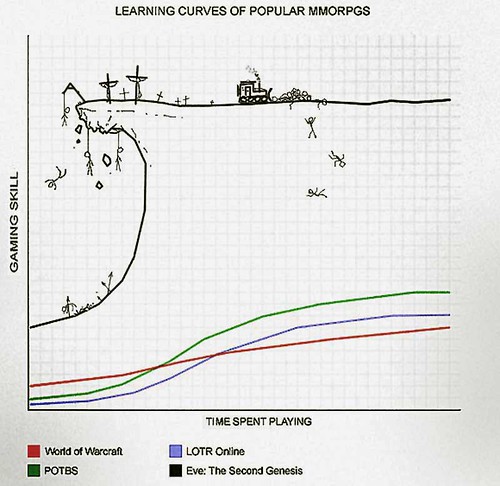
One thing I've learned is that no one has any idea what serotonin does (boy am I going to regret typing this when I finally stumble on a paper that explains it). Part of my project involves stimulating serotonergic centers, and measuring how that influences olfactory bulb processing. As a grad student I learned that serotonin is a neuromodulator, and that it's involved in depression and drug addiction (Duke had really great graduate training). So I performed a literature search, and found that all the reviews are from psychiatry journals, and the most cited hard neuroscience review is a 1992 review by Barry Jacobs. As far as I can tell there has not been a single well-cited neuroscience review focusing on serotonin since Jacobs's thorough, but (hopefully) outdated review.
Getting back to serotonin, it's a fascinatingly ubiquitous molecule. It is involved in a multitude of bodily functions, from bowel movement and vascular dilation, to cognition, motor control and more. There are fifteen receptor subtypes that are expressed throughout the brain and body, and many targets are directly innervated by different receptor subtypes with diametrically opposing effects. Neural activity in serotonergic nuclei like the dorsal Raphe is correlated with arousal, and these nuclei are completely silent during REM sleep. Some papers have shown serotonin generally depresses sensory processing, and that Raphe neurons are silent during focused sensation, but it's all rather vague. Despite all the research on serotonin, there is no obvious neural correlate with its activity, not reward, salience, arousal, attention, decision making, nothing. Which perhaps is for the best given that it's involved in everything.
I'm not too keen about neuromodulation, but it seems like the field is so wide open that if I discover anything, it would be "significant."
I'm not too keen about neuromodulation, but it seems like the field is so wide open that if I discover anything, it would be "significant."
Wednesday, March 3, 2010
Can I Cook It?
I ate dinner last night at Cuban Revolution, a local restaurant (trust me, this will eventually be about science). They put a heavy emphasis on presentation: when you walk in the restaurant, you are greeted by dim lighting and a string of blue lights on pillars; the menu itself is disorganized, with text in five fonts and five colors; they insist each and every one of their sandwiches are award winning. This emphasis on presentation only lowered my expectations of the food. I ordered ropa vieja, which I believe is Cuban for Pad Thai, and was both relieved and disappointed by how adequate it was. Thinking about why, I realized that I probably could have cooked something similar myself.
I am a mediocre cook. I started by boiling pasta, but have moved up to complicated techniques like pan frying. My specialties include lasagna, various marinades, and kibbeh. When I got to restaurants, my first criterion is, it has to be better than what I can make myself. As I've improved my cooking skill, the quality of restaurants I am willing to pay for has increased. TGI Friday's or cheap Chinese stir fry no longer cut it.
I read science papers in much the same way I evaluate food: could I have done it myself? Could I have performed the experiments? Or if the experiments are simple, do I know enough math for the analysis? For papers with simple, tedious methodology, I end up empathizing with the authors, that they performed so many experiments. For technique papers, I am impressed the authors were able to get their technique to work, even if they don't answer an interesting biological question.
Like my criterion for restaurants, my expectations for papers have shifted as I have learned more techniques, and how difficult (or easy) they are. When I was young, my eyes glazed over every western blot, and I struggled to keep IPs and antibodies straight when interpreting blots. A few years ago, however, I tried Western blotting myself. It was, of course, a disaster: my bands all smiled, my total protein levels were inconsistent, and my activators never activated. I realized that every biochemist must troubleshoot all of these minor details to get consistent results. Now, my eyes still glaze over when I see figure upon unending figure of western blots, but it is the glaze of respect. I would compare these papers to lasagna, where you don't feel guilty ordering it because you know how time consuming and tricky it is to make.
On the other hand, there are technical papers which I respect for how much math is involved. For example, the concepts behind STORM or PALM imaging are quite intuitive, but the math and programming behind them may be beyond my reach. Reading these papers is like eating at a molecular gastronomy restaurant, where amazing wizardy went into creating the food, but you only care that it tastes good.
Orthogonal to the easy/hard axis are chemistry papers (or more likely figures for me), where I simply have no idea what's going on. Mass spec? Baked alaska? How'd they do that?
In the middle are the papers that use techniques I am familiar with, or even use every day, like electrophysiology or imaging. For these papers, I have the highest standard. Are their images clean? The statistics fair? Do the experiments address their questions? For example, in my first blog post, I was critical of a recent paper on PI3K and AMPAR trafficking, two topics I know comparatively well. These papers are like going to a restaurant and ordering the marinated chicken: it had better be damn good you want me to come back.
When scientists discuss papers amongst themselves, we usually emphasize whether the results are believable, or conclusions justified. Reading papers alone, however, the first question I usually ask is, can I cook it?
I am a mediocre cook. I started by boiling pasta, but have moved up to complicated techniques like pan frying. My specialties include lasagna, various marinades, and kibbeh. When I got to restaurants, my first criterion is, it has to be better than what I can make myself. As I've improved my cooking skill, the quality of restaurants I am willing to pay for has increased. TGI Friday's or cheap Chinese stir fry no longer cut it.
I read science papers in much the same way I evaluate food: could I have done it myself? Could I have performed the experiments? Or if the experiments are simple, do I know enough math for the analysis? For papers with simple, tedious methodology, I end up empathizing with the authors, that they performed so many experiments. For technique papers, I am impressed the authors were able to get their technique to work, even if they don't answer an interesting biological question.
Like my criterion for restaurants, my expectations for papers have shifted as I have learned more techniques, and how difficult (or easy) they are. When I was young, my eyes glazed over every western blot, and I struggled to keep IPs and antibodies straight when interpreting blots. A few years ago, however, I tried Western blotting myself. It was, of course, a disaster: my bands all smiled, my total protein levels were inconsistent, and my activators never activated. I realized that every biochemist must troubleshoot all of these minor details to get consistent results. Now, my eyes still glaze over when I see figure upon unending figure of western blots, but it is the glaze of respect. I would compare these papers to lasagna, where you don't feel guilty ordering it because you know how time consuming and tricky it is to make.
On the other hand, there are technical papers which I respect for how much math is involved. For example, the concepts behind STORM or PALM imaging are quite intuitive, but the math and programming behind them may be beyond my reach. Reading these papers is like eating at a molecular gastronomy restaurant, where amazing wizardy went into creating the food, but you only care that it tastes good.
Orthogonal to the easy/hard axis are chemistry papers (or more likely figures for me), where I simply have no idea what's going on. Mass spec? Baked alaska? How'd they do that?
In the middle are the papers that use techniques I am familiar with, or even use every day, like electrophysiology or imaging. For these papers, I have the highest standard. Are their images clean? The statistics fair? Do the experiments address their questions? For example, in my first blog post, I was critical of a recent paper on PI3K and AMPAR trafficking, two topics I know comparatively well. These papers are like going to a restaurant and ordering the marinated chicken: it had better be damn good you want me to come back.
When scientists discuss papers amongst themselves, we usually emphasize whether the results are believable, or conclusions justified. Reading papers alone, however, the first question I usually ask is, can I cook it?
Wednesday, February 10, 2010
Lab Fashion
Having been a scientist for going on six years now, I have little awareness of how outsiders view science, or scientists themselves. The best glimpses I get are from movies and television, where scientists are dressed in white lab coats, and work in colorful rooms. The truth, while not quite diametrically opposed, is much less sexy.
Almost no one in the lab actually wears lab coats. In fact, my high school biology teacher once joked that if you ever see a lab wherein everyone is wearing lab coats and goggles, you should run because they are working with very dangerous things. Typically, scientists dress like computer programmers, viz. jeans and a t-shirt. If you are more senior, you might wear what my friend calls the "scientist's uniform" of khaki slacks and a blue button down.
In fact, the dress code of the lab is so casual that I am instantly suspicious of anyone who dresses too well. When I see someone in a blazer, I wonder if they have a job interview. Or someone wearing a white lab coat, makes me wonder why they are trying to appear to be working (lab coats are of course essential for many lab procedures, like dissections. My rule of thumb is that you should never wear a lab coat without gloves). My lab recently bought lab coats for a few people, and they now wear them when they are doing any work in the lab, not just the dangerous or dirty stuff. It irks me. To be fair, one's attitude can be changed by the clothes one wears, and I would endorse any action that makes one work more effectively. I would need to see the data, though, that shows lab coats make them more effective.
Medical doctors are some of the worst offenders in terms of using the white coat as a status symbol. For doctors, the coats are certainly necessary when working with patients that may bleed or drip muccus. But the doctors often do not disrobe outside the office, and wear their coats in the cafeteria or on the way to their car. Part of being a doctor is certainly to make people as comfortable as possible, and wearing a lab coat may inspire confidence in patients. Like scientists, though, when they are worn too often, I become suspicious that they are compensating. It doesn't seem very hygenic, either, to be wearing your dirty safety clothes in public, but then again, I'm not a doctor.
Almost no one in the lab actually wears lab coats. In fact, my high school biology teacher once joked that if you ever see a lab wherein everyone is wearing lab coats and goggles, you should run because they are working with very dangerous things. Typically, scientists dress like computer programmers, viz. jeans and a t-shirt. If you are more senior, you might wear what my friend calls the "scientist's uniform" of khaki slacks and a blue button down.
In fact, the dress code of the lab is so casual that I am instantly suspicious of anyone who dresses too well. When I see someone in a blazer, I wonder if they have a job interview. Or someone wearing a white lab coat, makes me wonder why they are trying to appear to be working (lab coats are of course essential for many lab procedures, like dissections. My rule of thumb is that you should never wear a lab coat without gloves). My lab recently bought lab coats for a few people, and they now wear them when they are doing any work in the lab, not just the dangerous or dirty stuff. It irks me. To be fair, one's attitude can be changed by the clothes one wears, and I would endorse any action that makes one work more effectively. I would need to see the data, though, that shows lab coats make them more effective.
Medical doctors are some of the worst offenders in terms of using the white coat as a status symbol. For doctors, the coats are certainly necessary when working with patients that may bleed or drip muccus. But the doctors often do not disrobe outside the office, and wear their coats in the cafeteria or on the way to their car. Part of being a doctor is certainly to make people as comfortable as possible, and wearing a lab coat may inspire confidence in patients. Like scientists, though, when they are worn too often, I become suspicious that they are compensating. It doesn't seem very hygenic, either, to be wearing your dirty safety clothes in public, but then again, I'm not a doctor.
Subscribe to:
Posts (Atom)